
 800.473.5713
This question comes up on almost every first call.
And I get why people hesitate to ask it. Nobody wants to sound like they’re anchoring low. Nobody wants to throw out a number that kills the conversation before it starts. And nobody wants to feel like they’re playing poker.
So it’s better to just say it plainly.
For us, video projects usually range from about $15,000 to $500,000 or more, depending on what we’re making. That’s a wide range. I know it is. But it’s an honest one. And the reason it’s wide is actually the useful part.
What actually drives the cost
Video production pricing isn’t (shouldn’t be) mysterious. It usually comes down to a few concrete things.
1. Crew size and experience
A one-person crew is going to cost a lot less than a crew of six or eight. That’s obvious.
What’s less obvious is what that changes.
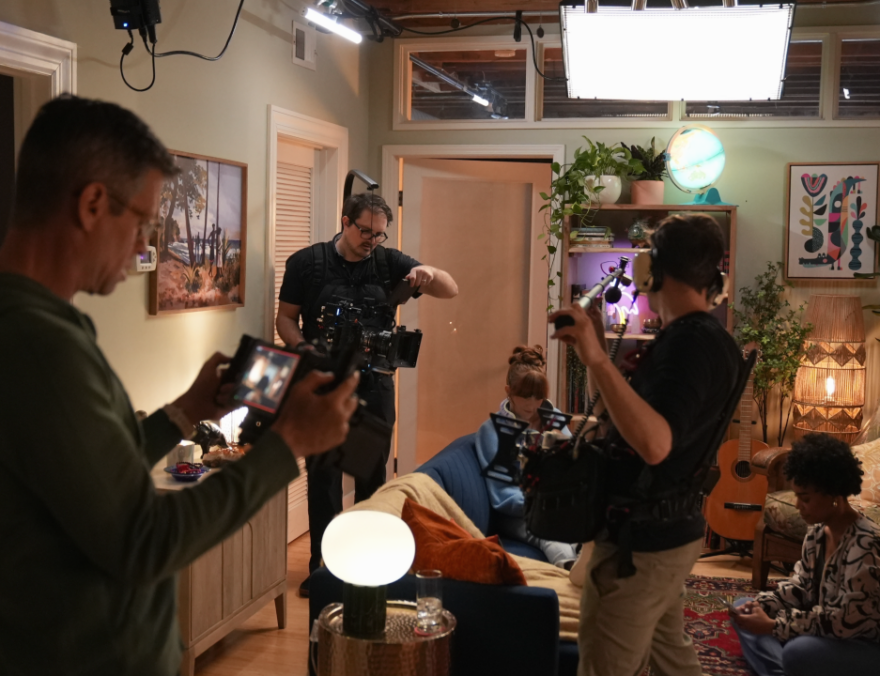
A larger crew doesn’t just add cost. It adds coverage, efficiency, and control. You can run parallel setups. You can have dedicated lighting. You can capture B-roll while interviews are happening instead of waiting to do everything one piece at a time.
Sometimes that matters a lot. Sometimes it doesn’t.
2. Number of shoot days
More shoot days means more cost. Crew rates. Equipment. Travel. Locations. Production overhead.
A two-hour interview shoot and a three-day location production may both end up as “a video,” but they’re not the same kind of undertaking.
3. Talent and locations
If you need professional on-camera talent, that adds cost.
If you need to shoot somewhere other than your office, that can add cost too. Location fees. Permits. Travel. Logistics.
These aren’t incidental details. They affect the whole production.
4. Post-production
A lot of clients still think the production is the shoot.
It isn’t.
A lot of the real work happens after the cameras are packed up. Editing. Color. Sound mix. Music. Motion graphics. Revision rounds. Versioning. And are we talking a single video deliverable, or a library of content?
That’s skilled time. And skilled time costs money.
5. Project complexity
This is the big one.
A simple interview-driven brand piece and a multi-city documentary with eight subjects and custom animation might both get called “brand videos.” But they’re not remotely the same project.
Complexity compounds. It affects pre-production, production, and post.
That’s why the range gets wide.
The ranges I’d give you in real life
Broadly speaking, this is how I think about it:
$10,000 to $15,000 Small scope. Usually a single-day shoot, a small crew, and a straightforward edit. Good for simple interview content, internal updates, or basic social video.
$15,000 to $50,000 This is where a lot of solid corporate video work lives. Enough budget for real planning, a professional crew, and a thorough edit. Brand films. Recruiting pieces. Mission-driven content.
$50,000 to $150,000 More moving parts. More shoot days. More locations. More post-production. More complexity. This is where you start getting into higher-end brand films and documentary-style company stories.
$150,000 to $500,000+ Large-scale commercial and documentary work. Campaign-level projects. Multiple deliverables. Original music. Full post-production support. Bigger expectations. Bigger lift.
At Storyfarm, the average project falls between $30,000 and $150,000. Any outliers? Always. But after pouring over 16 or so years of making videos, this is typical range.
We’re direct about that because it saves everyone time.
The cheapest option is often not the cheapest
I’ve seen this a lot.
A company gets a few quotes. They pick the lowest one. The video gets made. It’s fine. Technically acceptable. Nothing’s obviously wrong with it.
But it doesn’t do the job.
It doesn’t tell the story clearly. It doesn’t reflect the brand the way it needs to. It gets shown once in a meeting, then disappears onto a server.
That’s not really a savings story.
That’s a do-it-twice story.
The better question isn’t, “How little can we spend?”
It’s, “What does this video need to do, and what’s it worth to do that well?”
If the video is going to help anchor a brand launch, support a capital campaign, or live inside onboarding for the next three years, then it’s doing real work.
It should be built like it matters.
What to do with this
When you talk to a production company about budget, just be direct.
Tell them what you’re thinking.
A good partner will tell you what’s realistic at that level. They’ll tell you where the tradeoffs are. And they’ll tell you if the scope and the budget don’t match.
That’s useful.
What’s less useful is someone saying yes to your number immediately without asking harder questions.
Contrary to popular expectation, the goal isn’t to squeeze the most video out of a budget. It’s to make something that actually works, and to understand what that takes before you start.


